Materials and Sizes for Baby Blankets: How to Choose the Ideal Blanket for Your Little One
What do you need to know about baby blanket sizes? We’re happy to explain. You’ll read all about this and more in this blog.
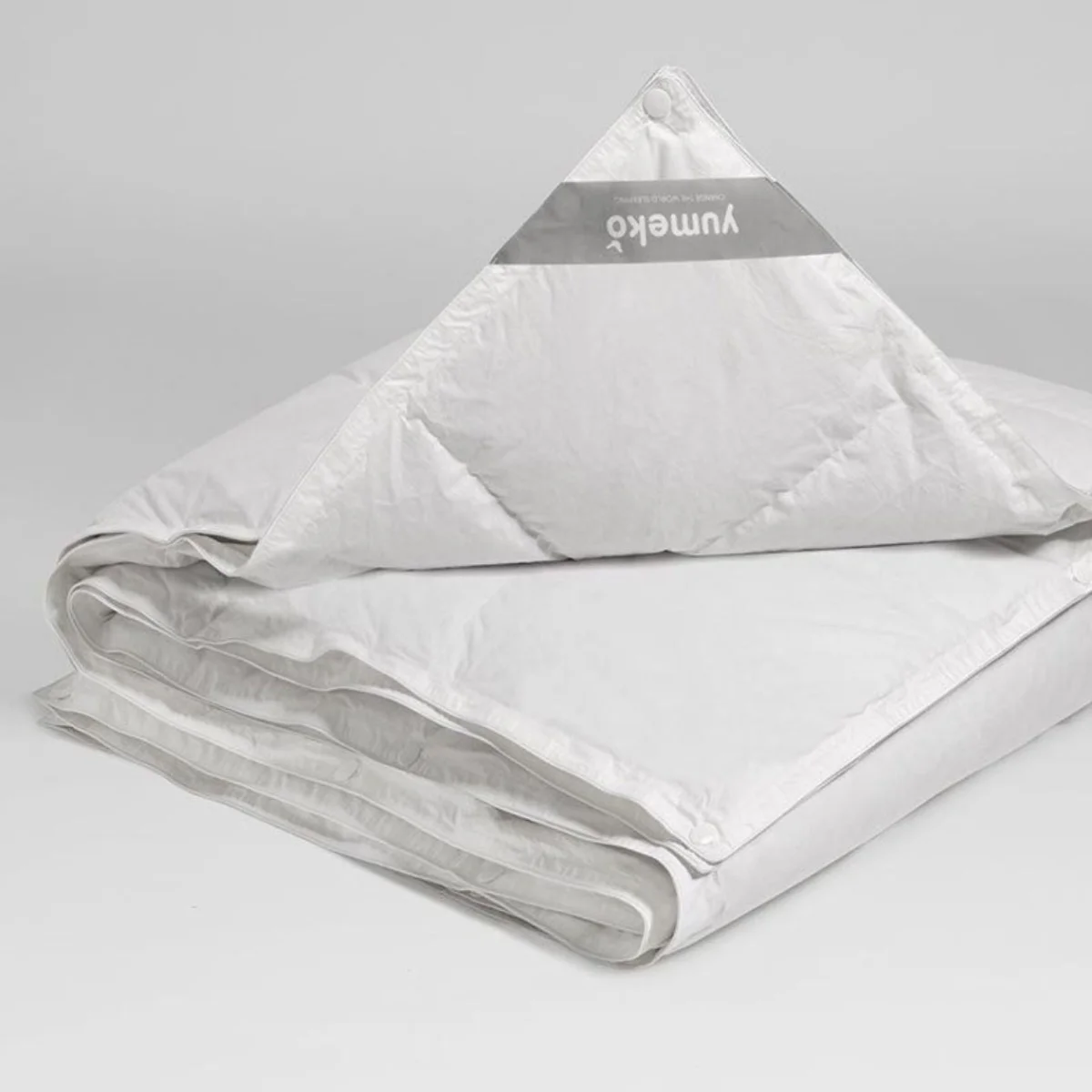
When choosing a new duvet, the question “down or feather duvet?” naturally comes up. So which is better — a down or a feather duvet? To answer that, we’ll give you all the information you need to make a well-considered choice. We’ll walk you through the similarities and the differences. Down and feather duvets each have unique properties. We’ll tell you all about them.

The first step in answering the question “down or feather duvet” is understanding the difference. Down and feathers are both natural fillings that come from birds, usually ducks or geese. But what is the difference?
Down is the soft, fluffy underlayer of the bird, found mainly on the belly. It is very light and soft and has excellent insulating properties. Down duvets can trap a lot of air, which creates high insulation while still allowing good breathability. Down duvets often feel softer and more luxurious than those with feathers. They are also usually much lighter in weight.
Feathers form the bird’s outer layer and contain a small, firm quill in the middle. They are sturdier and heavier than down, which leads to slightly lower insulation. Feathers can hold air well, but less so than down. Feather duvets are also a bit firmer and less expensive than down ones. They can feel a little stiffer, and the quills can sometimes be felt through the fabric. If you like a heavier duvet, a feather duvet is an excellent choice for you.

If you love a fluffy, lightweight duvet that’s perfect for a cold winter’s night, a down duvet may be the right choice for you. If you prefer something a little firmer and heavier, choose a duvet with feathers. And if your budget is a bit lower but sustainability still matters, a feather duvet is often the better fit.

If the answer to “what’s better: down or feather duvet?” still isn’t clear, you can also choose a half-down duvet. This gives you the best of both worlds, so you don’t have to choose between a down or a feather duvet. Half-down duvets offer a perfect balance between comfort, support and cost. A higher down percentage gives more softness and insulation, while a higher feather percentage offers more firmness and support. Feathers are also less costly, which changes the price compared to a 100% down duvet.
Good to know: despite what the name suggests, it isn’t a 50–50 split. Yumeko’s half-down duvets contain 85% feathers and 15% pure down.
Besides choosing between a down or feather duvet, you can also choose between different types of down and feathers. So if you’re asking “which down should I choose for a duvet?”, you can weigh up a few more properties. Goose down has larger and stronger clusters than duck down or duck feathers. That means even less filling is needed to achieve the same insulation and warmth. A goose down duvet is therefore extra light. “Sleep tight” can be taken very literally here.
Alongside choosing a duvet, the question “down or feather pillow?” often comes up too. As with duvets, a down pillow offers more softness and less support, while a feather pillow is firmer and gives your head more support. The choice between a down or feather pillow depends on your sleep preferences and any neck or back complaints. In our collection you’ll find sustainable pillows made from duck and goose down, half-down and a blend of duck down and natural latex.
Once you’ve decided that a down duvet is the best option for you, it’s also important to know “how do I wash a down duvet?” Here are a few tips to keep your duvet in top condition. Washing a duvet with feathers and/or down at home is not a good idea. We recommend taking your duvet to a dry cleaner and asking them to follow the care instructions carefully. The right cleaning method is closely linked to the lifespan of your duvet. Read our detailed tips on how best to wash a down duvet in our blog article.


What do you need to know about baby blanket sizes? We’re happy to explain. You’ll read all about this and more in this blog.

Washing your Yumeko pillow requires special care. Read everything you need to know about proper pillow maintenance here.

Cold feet in bed can be annoying, especially if they keep you awake at night. We explain the causes – and what you can do about them.

Pillows are very important for the overall look and feel of your sleep space. By placing pillows in different sizes on your bed, you instantly create a hotel chic feel. Choose the right pillowcase sizes and you can give your bed a quick makeover in no time!

What actually determines when we sleep and wake up? And how can you optimise your sleep rhythm to have more energy? We take you into the fascinating world of our biological clock and discover how you can make it work in your favour.

You might think: I’ll just wash my down duvet right away. But can you steam or wash a down duvet? And how do you do that without shortening its lifespan?

Are you decorating your bedroom? Hotel chic is one of the most beautiful styles you can choose. And with our step-by-step plan, you can now create that in your own bedroom too.

More than 20% of people in the Netherlands sleep poorly. “How do you fall asleep quickly?” is therefore a very common question. Read 5 tips and techniques to help you fall asleep.
In this blog, we explain how to care for your bed linen in the best possible way.

Want to enjoy the comfort of your topper for as long as possible? Then it’s important to know how to look after your topper and what the average lifespan of a topper is. How long does a topper last? Read it here.