What Can You Do About Snoring? Our Tips
What can you do about snoring? It’s a question many people struggle with. Since the causes of snoring vary, we’re happy to explain more—and share our tips.
Did you know that the quality of your pillow is partly determined by its lifespan? A down pillow lasts an average of five years. And that lifespan is closely linked to how well you maintain your pillow. But how do you do that properly? Washing your Yumeko pillow requires special attention, for example, as you can’t simply put it in the washing machine. We also advise against washing your pillow with baking soda or other household remedies. You may now have all kinds of questions, such as: how do you wash a pillow? And how often should you wash a pillow? We’re happy to answer those questions. You’ll also find other useful maintenance tips for your pillow here.

Want to wash your down pillow, for example if it has a stain? Then it’s important to know that you can’t put a down pillow in the washing machine. We therefore recommend having your pillows professionally cleaned at a dry cleaner using the special P cleaning program. This means the solvent perchloroethylene is used. Always ask the dry cleaner to carefully follow the care instructions before cleaning your down pillow. Proper cleaning is closely linked to the lifespan of your pillow.
Want to wash your feather pillow? For example our half-down pillow with feathers and down? This also requires special care. Just like down pillows, feather pillows cannot be washed at home in the washing machine. You can, however, take your feather pillow to a dry cleaner. Always pay close attention to the care instructions, so you can enjoy the benefits of an eco feather pillow for as long as possible.
Washing a wool pillow in the washing machine is also not a good idea. What’s good to know is that wool is naturally self-cleaning. The lanolin, the natural fat from a sheep’s fleece, ensures that wool repels dirt and bacteria. Washing a wool pillow is therefore usually unnecessary. Still want a clean pillow? Then professional cleaning using program P is the right approach. If you only want a fresh pillowcase, you can unzip the cover, remove the filling and wash the cover in the washing machine.

Did you choose kapok as the sustainable material for your pillow? Then it’s important to be extra careful. Washing a kapok pillow is completely out of the question. You can’t wash these pillows at home in the washing machine, nor can they be cleaned by a dry cleaner. Do you have a stain on the cover? Then gently dab it clean with a slightly damp cloth and an eco-friendly stain remover, such as one from Ecover or De Traay. And although washing a kapok pillow with filling isn’t a good idea, you can, just like with wool pillows, remove the kapok from the cover and wash only the pillowcase.

So washing your pillow isn’t always an option. We also advise against washing your pillow with baking soda or other household remedies, as these often do more harm than good to sustainable materials.
Fortunately, there are other ways to keep your pillow fresh!

What can you do about snoring? It’s a question many people struggle with. Since the causes of snoring vary, we’re happy to explain more—and share our tips.

Silk has been valued for centuries because of its luxurious appearance and silky-soft feel. But what exactly is silk? We’d love to tell you more about this unique—yet not animal-friendly—material. Because what is silk made from, what is the difference between silk and satin, and what are animal-friendly alternatives? We’ll also answer other important questions, such as: should you choose a satin or silk pillowcase? And what is mulberry silk?

Read everything about the unique material TENCEL™. We answer questions like “what is TENCEL™ fabric?” and “what is TENCEL™ made from?”

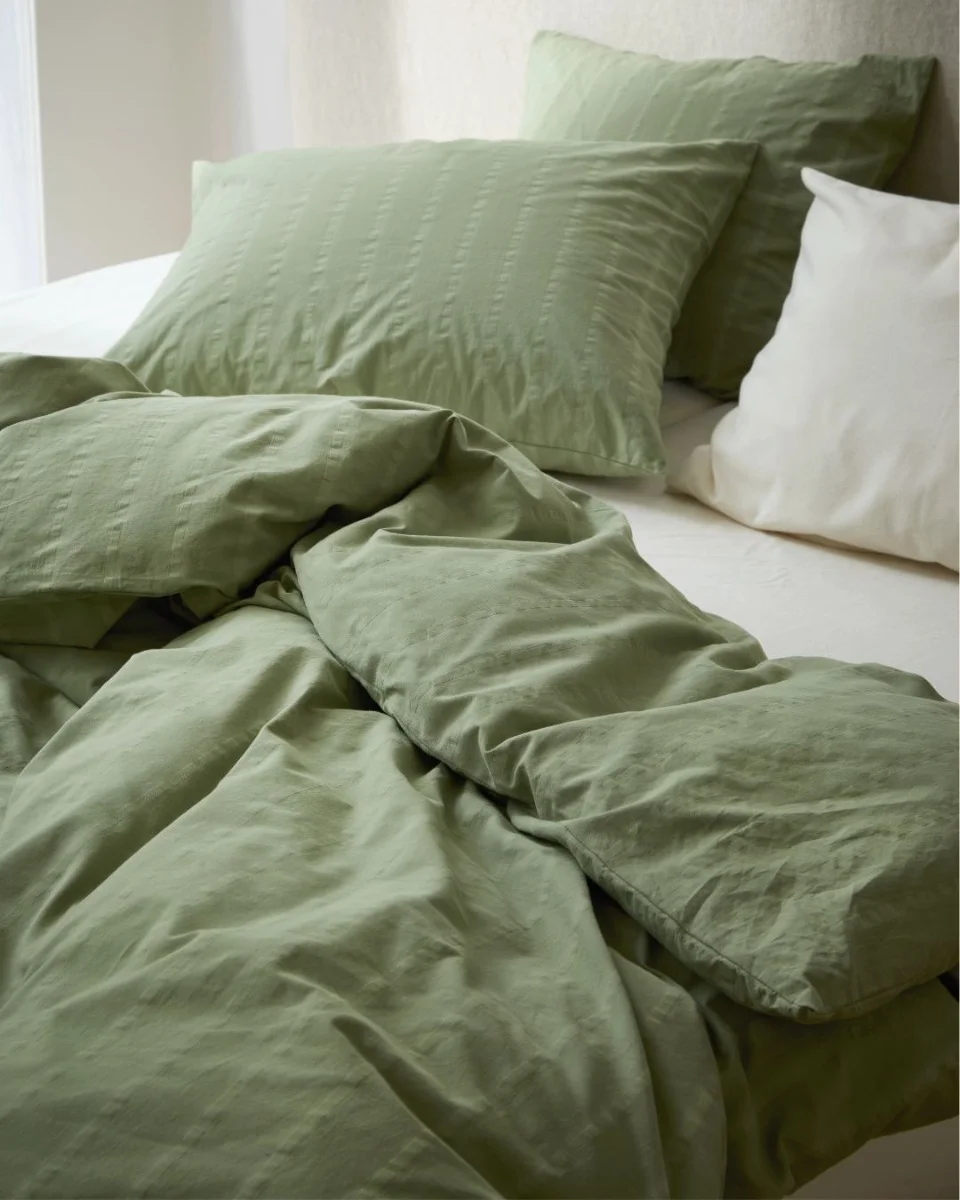
You may have heard of “seersucker” before—perhaps while shopping for clothing or seersucker bedding. This unique fabric is very popular, especially in warmer climates. It’s wonderfully comfortable to sleep under, but what exactly is seersucker? And what makes a seersucker duvet cover so comfortable? In this blog, we’ll tell you everything you need to know about seersucker fabric. A little spoiler: seersucker cotton is incredibly breathable and very easy to care for. For example, seersucker doesn’t need ironing—how convenient!

Satin takes your sleep experience to the next level. But what exactly is satin, how is it made, and what makes it so special? Read more here!

Linen is a beautiful fabric with lots of character and it’s incredibly durable. In this blog, we’ll tell you everything about it. You’ll discover more about the benefits of linen, its environmental impact, and how linen is made. But first…

One of our best-selling pillows is filled with the natural material kapok. But what exactly is kapok? Read all about it here!

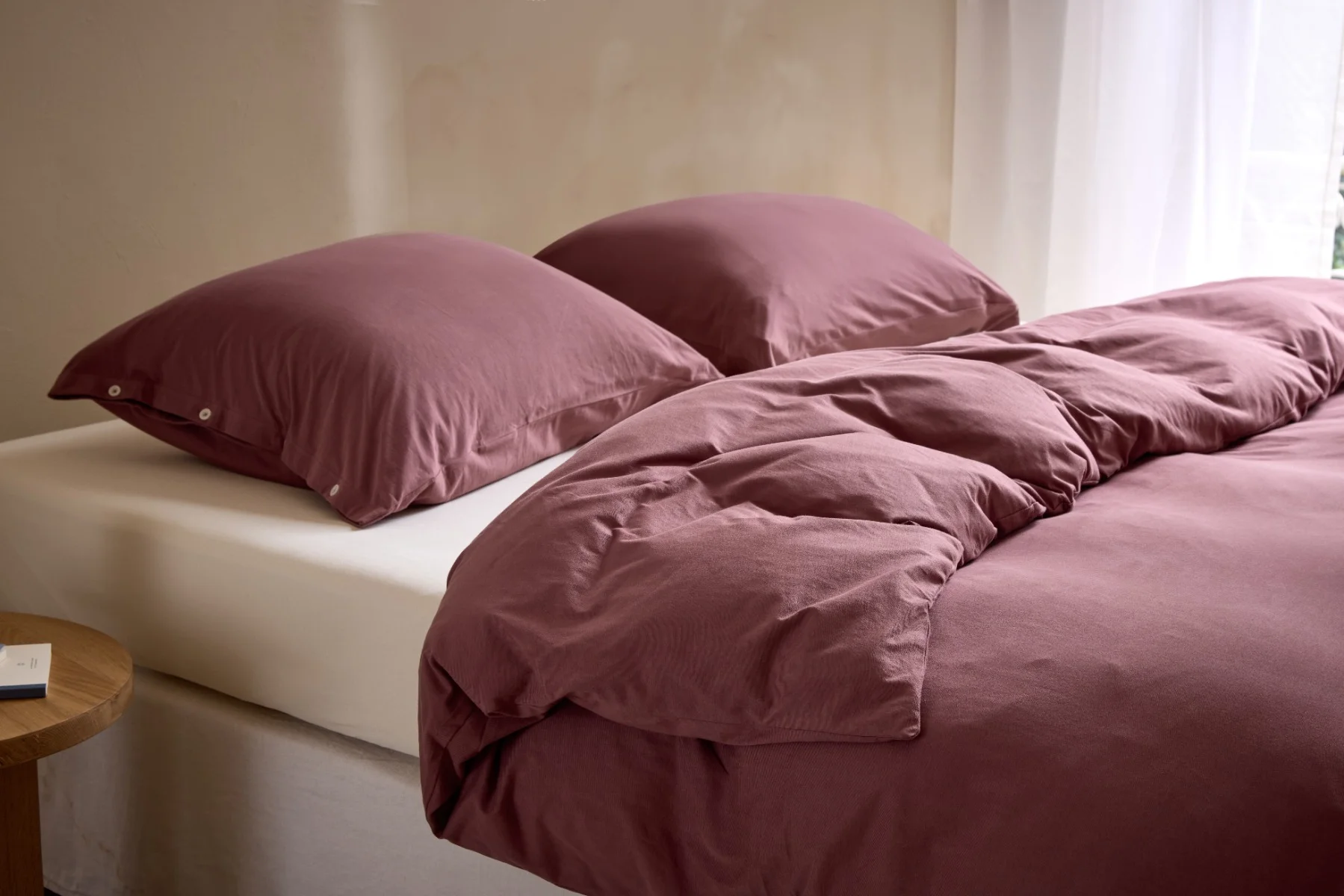
What is jersey cotton? And first of all: what is jersey fabric? Let’s dive into the world of this comfy material and discover why it’s so perfect for a good night’s sleep.

Flannel is a fabric that perfectly combines warmth and softness. But what exactly is flannel? In this blog, we’ll tell you everything about this special fabric and why we love it so much.

The question “what is Egyptian cotton?” comes up often—and that’s no surprise. How can you recognize Egyptian cotton, and is it worth the investment? We’ll explain it all in this blog.