What Can You Do About Snoring? Our Tips
What can you do about snoring? It’s a question many people struggle with. Since the causes of snoring vary, we’re happy to explain more—and share our tips.
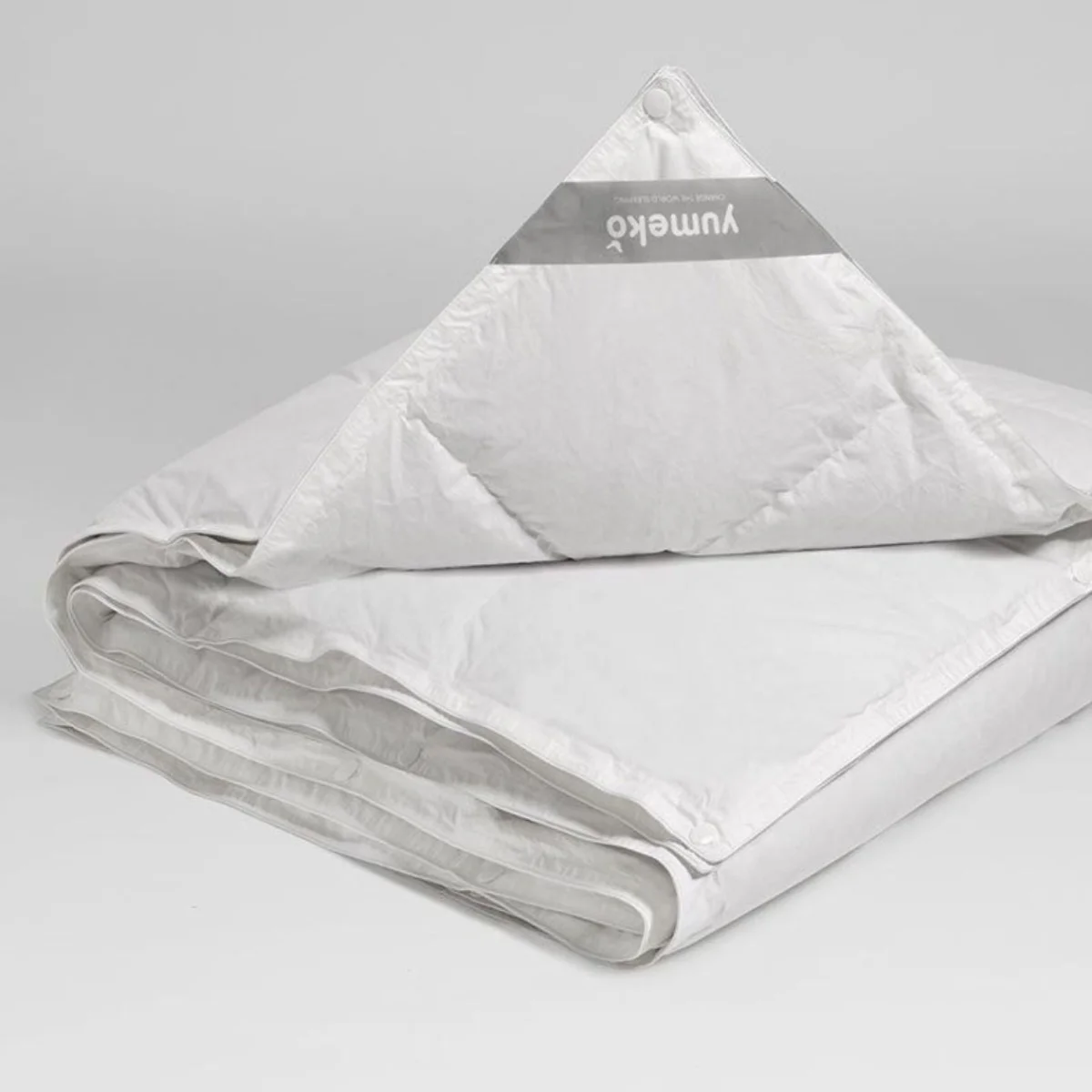
About one in three people sleeps under a down duvet — and that’s no surprise. A down duvet insulates well while feeling light and airy at the same time. Down keeps you warm during cold winter nights without feeling heavy. It’s like sleeping under a warm cloud. Down is also often used in pillows, where you can enjoy the same benefits: you can sink into it comfortably while still getting enough support.
In short, down gives you unbeatable nights of sleep. But then comes the big question: should you choose duck down or goose down? In this blog, we’ll explain the differences between the two so you can make a well-informed decision for your new goose down or duck down duvet and pillow.

Although down is always a great addition to your bedroom, there are different options, each with its own advantages. To make the choice between duck down or goose down a little easier, we compare them across seven points.
| Duck Down | Goose Down | |
| 1. Insulation | Very good | Excellent |
| 2. Moisture | Very good | Excellent |
| 3. Scent | Slightly stronger than goose down | Neutral |
| 4. Structure | Slightly sharper, may poke through the cover | Less sharp, less likely to poke through the cover |
| 5. Lifespan | Less resilient, slightly shorter lifespan | More resilient, longer lifespan |
| 6. Price | Less scarce, so slightly cheaper | More scarce, so less cheap |
| 7. Washing | Down should not be washed at home — always use a professional | |
By now you’ve seen that the choice between duck down or goose down depends on your preferences and budget. But which is warmer — duck down or goose down? Goose down is warmer! As the table shows, there is a small difference in insulation value. Down naturally has a high insulating capacity, meaning you need less filling to stay warm.
Because goose down consists of larger and stronger down clusters than duck down or duck feathers, even less filling is needed to achieve the same level of warmth. A goose-down duvet is therefore extra light while still wonderfully warm.
Another difference is moisture absorption. If you’re asking “what’s better, duck down or goose down?” in this area, goose down scores slightly higher. This is related to the structure of the down — more on that in point 4.
Why does moisture absorption matter? During the night we lose a lot of moisture, through sweating but also through breathing. A moisture-absorbing duvet and pillow are essential for a good night’s sleep. Down is always a great choice because it absorbs moisture extremely well — but goose down does it just a little better.

Another difference is scent. Duck down and goose down have different natural smells. Why? Down comes from animals, so duvets and pillows made from duck or goose down naturally carry a light scent. This scent is slightly stronger in duck down compared to goose down.
In most cases, the scent is not overpowering — most of it disappears during cleaning before the duvet or pillow is made. And often, the scent of your laundry detergent for your pillowcase or duvet cover masks the natural smell. So it doesn’t have to be a deal-breaker.

At first glance, you may not feel much difference between a goose down or duck down duvet or pillow. But as shown in the table, duck down is slightly sharper than goose down. This comes from the “quill” that holds the feathers and down together. In duck down (or feathers), this quill is younger and therefore sharper. This means that now and then a feather may poke through the fabric (the cover) of the duvet or pillow.
When it comes to lifespan, goose down clearly wins. If you ask “what’s better, duck down or goose down?” in this case, goose down is the best option. Goose down is naturally more resilient. Its stronger and larger down clusters hold their shape better and therefore last longer. This makes goose down a more durable choice for anyone seeking long-lasting comfort and quality.
Duck down also offers ultimate comfort, of course. It is simply a bit less resilient than goose down. In other words: because the fibres lose their shape more quickly, duck down has a shorter lifespan. A slightly less durable option.
Another clear difference lies in price. Duck down and goose down fall into different price ranges because the cost of a down product depends partly on the availability of the down. Goose down is scarcer than duck down, which makes it more expensive. This — together with its exceptional qualities and long lifespan — explains the higher price of goose-down duvets and pillows.
Maintaining your duck down or goose down pillow or duvet requires care. Although you can find plenty of online tips about washing down duvets at home, we strongly advise against it. Down fibres — whether from ducks or geese — are extremely delicate. To preserve the quality and lifespan of your duvet, professional cleaning is the best option. A professional knows exactly how to treat down fibres to keep their resilience and insulating properties intact.
Still unsure whether to choose a duck down or goose down duvet or pillow? We’re happy to help advise you on the best choice for you. Or visit our showroom in Amsterdam and experience the ultimate softness of down for yourself!

What can you do about snoring? It’s a question many people struggle with. Since the causes of snoring vary, we’re happy to explain more—and share our tips.

Silk has been valued for centuries because of its luxurious appearance and silky-soft feel. But what exactly is silk? We’d love to tell you more about this unique—yet not animal-friendly—material. Because what is silk made from, what is the difference between silk and satin, and what are animal-friendly alternatives? We’ll also answer other important questions, such as: should you choose a satin or silk pillowcase? And what is mulberry silk?

Read everything about the unique material TENCEL™. We answer questions like “what is TENCEL™ fabric?” and “what is TENCEL™ made from?”

You may have heard of “seersucker” before—perhaps while shopping for clothing or seersucker bedding. This unique fabric is very popular, especially in warmer climates. It’s wonderfully comfortable to sleep under, but what exactly is seersucker? And what makes a seersucker duvet cover so comfortable? In this blog, we’ll tell you everything you need to know about seersucker fabric. A little spoiler: seersucker cotton is incredibly breathable and very easy to care for. For example, seersucker doesn’t need ironing—how convenient!

Satin takes your sleep experience to the next level. But what exactly is satin, how is it made, and what makes it so special? Read more here!

Linen is a beautiful fabric with lots of character and it’s incredibly durable. In this blog, we’ll tell you everything about it. You’ll discover more about the benefits of linen, its environmental impact, and how linen is made. But first…

One of our best-selling pillows is filled with the natural material kapok. But what exactly is kapok? Read all about it here!

What is jersey cotton? And first of all: what is jersey fabric? Let’s dive into the world of this comfy material and discover why it’s so perfect for a good night’s sleep.

Flannel is a fabric that perfectly combines warmth and softness. But what exactly is flannel? In this blog, we’ll tell you everything about this special fabric and why we love it so much.

The question “what is Egyptian cotton?” comes up often—and that’s no surprise. How can you recognize Egyptian cotton, and is it worth the investment? We’ll explain it all in this blog.